

Strengthen, rebuild, and restore a compromised or damaged skin barrier
A compromised or damaged skin barrier impairs the skin’s natural protective function and leads to dryness, irritation, and sensitivity. A targeted skincare routine supports the rebuilding of the barrier, strengthens its resilience, and helps restore the skin’s balance.
The skin barrier is the outermost protective layer of the skin and acts as a natural shield against environmental irritants, pollutants, and moisture loss. When it is healthy and intact, the skin appears well-hydrated, resilient, and balanced. If the skin barrier is compromised, the skin’s protective function gradually diminishes. As a result, the skin becomes more sensitive and is more prone to tightness, redness, irritation, and inflammatory reactions.
What is the natural skin barrier?
The natural skin barrier is a complex, multi-layered protective system that reliably shields the body’s interior from the negative effects of external influences while regulating moisture loss. This moisture loss is referred to as transepidermal water loss (TEWL) and describes the amount of water that passively evaporates from the skin.
A healthy TEWL value is crucial for well-hydrated, resilient skin. If the value is elevated, the skin can become dry, sensitive, and more prone to irritation.
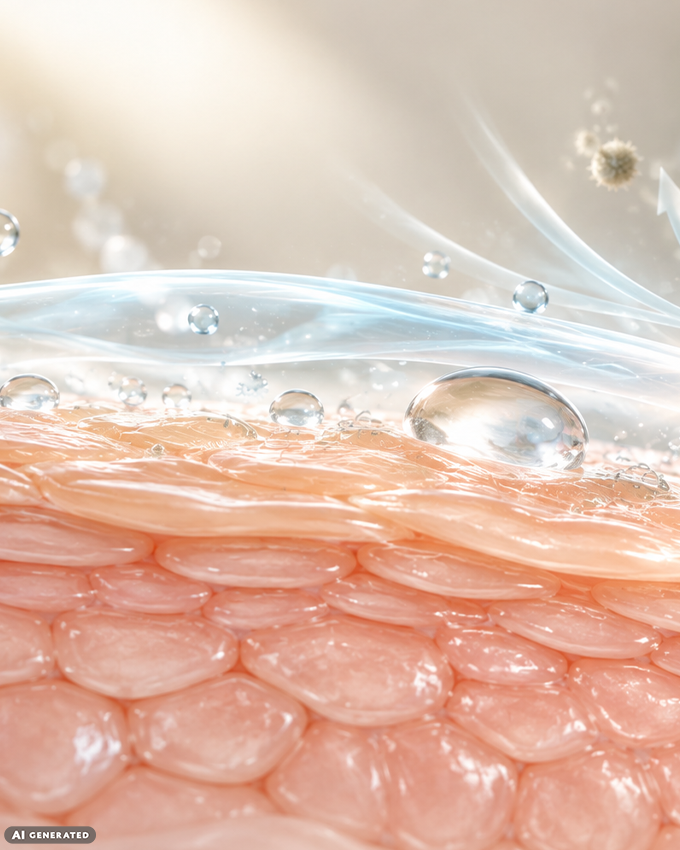
The skin’s protective barrier does not consist of a single layer, but is composed of three closely interacting components: the physical, chemical, and immunological skin barriers.
Structure, Function, and Importance of (Skin) Care
Structurally, the barrier consists of keratinocytes, the skin’s own lipids such as ceramides, and the hydrolipid film. These components stabilize the skin’s structure, retain moisture, and make it more difficult for harmful substances and microorganisms to penetrate.
A targeted skincare routine tailored to individual skin needs supports the skin barrier’s structure, strengthens its resilience, and helps restore a healthy skin environment. To achieve this, it is important to use mild cleansing products and skincare products containing valuable nourishing lipids.
This significantly supports the skin’s regenerative processes, allowing it to gradually rebuild its protective function. Over the long term, the skin becomes resilient, supple, and healthy.
Components of the skin barrier
What does a healthy skin barrier look like?
A healthy skin barrier is in a state of functional balance. The skin retains sufficient moisture, is protected from harmful influences, and responds appropriately to external stimuli.
Specifically, a healthy skin barrier is characterized by the following:
- Moisture is retained, and the skin does not dry out.
- Harmful substances, germs, and environmental irritants are effectively repelled.
- The pH level remains stable in the slightly acidic range (approx. 4.8–5.5).
- The skin’s immune system responds appropriately – neither too weak nor overactive.
The Immunological Skin Barrier
The skin has its own immune system. A network of specialized immune cells is located in the deeper layers of the skin. These cells detect intruders such as bacteria or allergens at an early stage and trigger targeted protective responses.
The outermost skin cells, known as keratinocytes, are also involved in this process. They possess special receptors (e.g., so-called Toll-like receptors) that enable them to recognize pathogens. In response, they release signaling molecules and antimicrobial peptides such as defensins, which directly combat pathogens. In addition, so-called Langerhans cells and certain T cells regulate the subsequent immune response.
› Want to know more?
Studies show that this system can become unbalanced in skin conditions: In atopic dermatitis, the body often produces too few antimicrobial peptides, making the skin more susceptible to infections. In rosacea, on the other hand, the immune response can sometimes be overactive, which can significantly exacerbate inflammation.
The Physical Skin Barrier
It forms the outer structure of the skin and is located in the outermost layer of the skin, known as the stratum corneum. It is often described using a “brick-and-mortar model”: The corneocytes are the “bricks,” while the skin’s own lipids, such as ceramides, act as the “mortar” and hold the structure together. This layer prevents too much water from escaping the skin. At the same time, the physical barrier makes it difficult for harmful substances, irritants, and pathogenic microorganisms to penetrate the skin.
The Chemical Skin Barrier
The chemical barrier includes the natural hydrolipid film as well as the skin’s so-called acid mantle. This maintains a slightly acidic pH level of approximately 4.8 to 5.5 (for detailed information, see the article on pH). This slightly acidic environment is crucial because it inhibits the growth of pathogenic microorganisms, supports the healthy skin microbiome, and maintains the skin’s barrier function. (For more information, see the article on the skin microbiome).
› Want to know more?
In various skin conditions, the pH level often shifts toward a more alkaline, i.e., higher range (toward neutral):
- Acne: pH levels often range from approximately 5.5–6.5
- Rosacea: pH levels often range from approximately 5.5–6.0
- Neurodermatitis (atopic dermatitis): pH levels often range between 5.5 and 7.0, sometimes even higher during acute flare-ups
An elevated pH value can:
- promote the growth of certain bacteria (e.g., Cutibacterium acnes in acne or Staphylococcus aureus in neurodermatitis)
- exacerbate inflammatory processes
- disrupt the skin’s lipid structure
- significantly slow down the skin’s regenerative processes
What is a compromised or damaged skin barrier?
When the skin barrier is damaged and irritated, its protective function is significantly impaired. The skin then loses moisture, becomes more sensitive to external stimuli, and is more prone to developing sensitive skin reactions and inflammation. As a result, keratinocytes, immune cells, and antimicrobial peptides are unable to perform their functions optimally.
Causes & Origins of a Compromised Skin Barrier
Both external environmental factors and internal factors within the body can weaken the protective layer. Often, multiple causes are at play simultaneously.
| External Factors | Internal Factors |
|---|---|
| Frequent washing or harsh cleansing and skincare products | Genetic predisposition |
| Environmental stressors such as UV radiation, cold, wind, dry air, or pollutants | Skin conditions such as acne, rosacea, or atopic dermatitis |
| Mechanical irritants, e.g., constant rubbing, scratching, or pressure | Age-related changes slow down lipid production |
| Infections caused by bacteria, fungi, or viruses | Malnutrition or metabolic disorders |
Recognizing and Understanding Symptoms of a Compromised Skin Barrier
A healthy skin barrier is in a state of functional balance. The skin retains sufficient moisture, is protected from harmful influences, and responds appropriately to external stimuli.
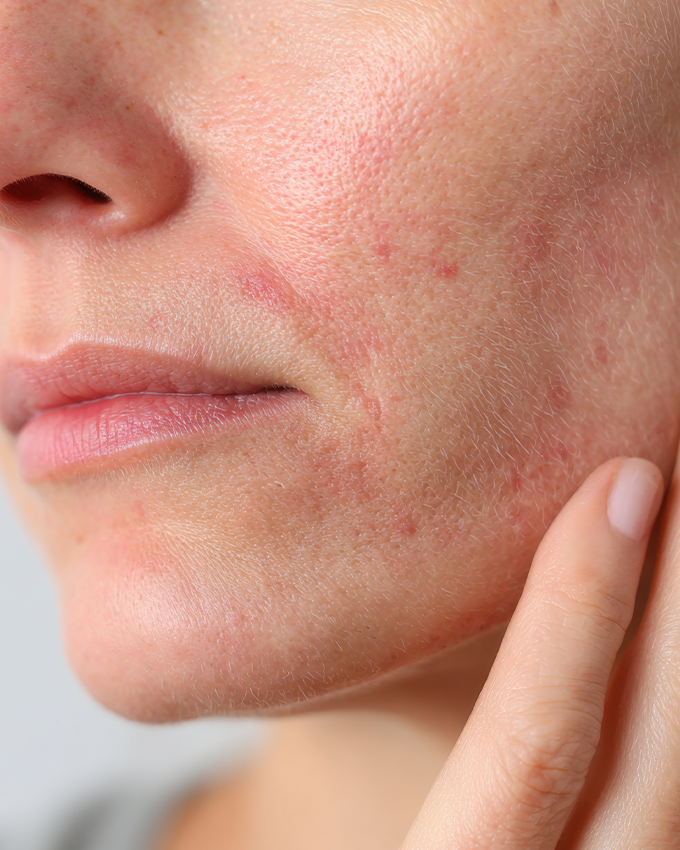
A weakened skin barrier may manifest itself through the following signs:
- Dryness: The skin feels rough and brittle and feels tight. Occasionally, rough patches or flaking may occur.
- Redness and irritation: Sensitive skin reacts more frequently to external stimuli such as harsh cleansing products, weather, or clothing.
- Itching or burning: Itching or burning may occur, especially in cases of atopic dermatitis or a compromised skin barrier.
- Sensitivity to environmental factors: Sun, wind, cold, or pollutants lead more quickly to irritation or redness.
- Increased transepidermal water loss (TEWL): The skin loses more moisture than it should, which exacerbates dryness and feelings of tightness.
- Prone to inflammation and infections: Due to the weakened protective barrier, bacteria, fungi, or allergens can penetrate more easily.
- Dull or uneven complexion: The skin often appears dull, lacks its natural glow, and looks rough or uneven in texture.
Strengthen and rebuild a compromised and damaged skin barrier
A key approach to regeneration is restoring the lipid structure in the stratum corneum. Lipid-rich skincare supports the integrity of the stratum corneum and significantly reduces water loss. However, consistently following a skincare routine tailored to your individual skin condition is equally crucial.
Only when products, active ingredients, and application steps are specifically tailored to the skin’s current condition can the skin barrier regenerate sustainably and remain healthy. An overly intensive or inappropriate routine can place additional stress on the skin, whereas a clearly structured, needs-based skincare regimen optimally supports the skin’s natural repair processes.
Cleansing to Strengthen the Skin Barrier
When cleansing the face, it is recommended to use gentle cleansing products with mild surfactants and, above all, to opt for a milky texture. The toners used afterward should also be as mild and gentle on the skin as possible in their formulation.
Product recommendation: Aloe Sensitive Cleansing Milk & Sensitive Toner with Aloe, SENSICURA Cleansing Emulsion & SENSICURA Toner
Cream to Strengthen the Impaired Skin Barrier on the Face
Soothing and lipid-supporting ingredients such as panthenol, (phyto-)squalane, jojoba oil, grape seed oil, and phytantriol promote regeneration. They stabilize the hydrolipid film and reduce irritation.
Product recommendation: Special Revitalizing Cream & SENSICURA Intensive Cream, SENSICURA Regeneration Cream & SENSICURA Moisturizing Complex
› Want to learn more?
How to treat a damaged skin barrier – serum or cream?
In cases of acutely damaged skin barrier, the initial focus should be on lipid-rich creams. They directly support the hydrolipid film, strengthen the lipid barrier, and reduce transepidermal water loss.
However, Dr. Spiller’s skincare philosophy generally follows a clearly defined approach: serums and creams are ideally always used in combination. While the serum, with its active ingredients, can penetrate deeper into the skin and deliver targeted moisture and active ingredients there, the cream performs a crucial function on the skin’s surface. It stabilizes the lipid barrier, protects against external influences, and “seals in” the active ingredients previously applied.
For skin with a compromised barrier, the following applies: The cream forms the foundation of the skincare routine, while a well-matched serum can be used as a supplement as soon as the skin can tolerate it—for long-lasting regeneration both deep within and on the surface.
Body Care to Strengthen the Skin Barrier
When the skin barrier is damaged, the skin on the body also requires special attention. Mild shower products followed by care with lipid-rich formulations help to gradually stabilize the skin’s protective function.
Product recommendation: SENSICURA Shower Milk & SENSICURA Hand Cream, SENSICURA Body Balm
The Importance of Sun Protection
UV radiation can directly impair the protective function of the skin barrier. A study found that UVB radiation is associated with a significant increase in transepidermal water loss (TEWL), which is a clinically measurable indicator of a weakened skin barrier. Using a sunscreen product is therefore essential for maintaining a healthy skin barrier.
Product recommendation: SUMMER GLOW Sun Sensitive Serum SPF 30 & SUMMER GLOW Sun Sensitive Cream SPF 50
› Want to learn more?
Good to know: A skincare routine consistently tailored to your skin’s condition plays a key role in stabilizing the skin barrier, strengthening its protective function, and keeping your skin healthy and resilient.
Should you exfoliate skin with a compromised barrier?
You should avoid harsh, abrasive exfoliants whenever possible, as they remove dead skin cells, which can reduce skin lipids, cause minor micro-injuries, and thus make the skin drier.
Conclusion
Allantoin is a proven active ingredient known for its soothing, anti-irritant, and regenerative properties. It supports natural cell regeneration, strengthens the skin barrier, and helps the skin retain moisture. As a result, the skin’s appearance becomes smoother, more even, and more resilient to external influences.
Allantoin is particularly beneficial for sensitive, dry, or irritated skin, helping to alleviate redness, irritation, and feelings of tightness. In addition to its use in many cosmetic products, allantoin is also suitable for supporting scar care and as part of adjunctive therapy for inflammatory skin conditions such as atopic dermatitis and psoriasis. Its excellent tolerability makes it a versatile and important ingredient in modern skincare products. Regular use can lead to a lasting improvement in skin health.
FAQs
How long does it take for the skin barrier to recover?
With consistent, appropriate care, the barrier can stabilize significantly within about four weeks. In cases of chronic skin conditions, the process may take longer because inflammatory processes and structural abnormalities can slow down the rate of regeneration.
Which ingredients help build the skin barrier?
Valuable lipids, (phyto-)squalane, hyaluronic acid, omega fatty acids, and panthenol support the formation and maintenance of a healthy skin barrier, as they complement the skin’s own structures, bind moisture, and promote the regeneration of the stratum corneum.
How can you preserve the natural skin barrier?
Gentle skincare, adequate hydration, UV protection, and a balanced lifestyle significantly support skin health because they stabilize the skin’s protective function and reduce harmful environmental factors as well as oxidative stress.
Why is the pH level so important?
The slightly acidic pH level of 4.8–5.5 protects the skin from pathogenic germs and helps maintain its natural balance by inhibiting the growth of unwanted microorganisms.
Why is a cream often more effective than a serum for damaged skin?
Creams contain a higher proportion of lipids, which stabilize the hydrolipid film and directly reduce water loss. Serums are more focused on active ingredients but are less designed to immediately strengthen the skin barrier.
References:
Berdyshev E. (2004): Skin Lipid Barrier: Structure, Function and Metabolism. Allergy, asthma & immunology research, 16(5), 445–461. https://doi.org/10.4168/aair.2024.16.5.445
Biniek, K., Levi, K., & Dauskardt, R. H. (2012): Solar UV radiation reduces the barrier function of human skin. Proceedings of the National Academy of Sciences of the United States of America, 109(42), 17111–17116. https://www.pnas.org/doi/full/10.1073/pnas.1206851109
Fluhr, J. W., Moore, D. J., Lane, M. E., Lachmann, N., & Rawlings, A. V. (2024): Epidermal barrier function in dry, flaky and sensitive skin: A narrative review. Journal of the European Academy of Dermatology and Venereology: JEADV, 38(5), 812–820 https://doi.org/10.1111/jdv.19745
Jungersted, J. M., Hellgren, L. I., Jemec, G. B., & Agner, T. (2008): Lipids and skin barrier function--a clinical perspective. Contact dermatitis, 58(5), 255–262. https://doi.org/10.1111/j.1600-0536.2008.01320.x
Paul V Andrew, Samuel F Williams, Kirsty Brown, John Chittock, Abigail Pinnock, Anna Poyner, Michael J Cork, Simon G Danby: Topical supplementation with physiological lipids rebalances the stratum corneum ceramide profile and strengthens skin barrier function in adults predisposed to atopic dermatitis, British Journal of Dermatology, Volume 193, Issue 4, October 2025, Pages 729–740, https://doi.org/10.1093/bjd/ljaf200
This may also be interesting:
Skin pH level
The skin's pH level is a crucial factor in the skin's protection, regeneration, and the effectiveness of skincare products. A stable, slightly acidic pH strengthens...
Skin microbiome
The skin microbiome is a living, sensitive microbial ecosystem that is as unique as each person’s fingerprint. It plays a key role in determining how healthy...

Sensitive & hypersensitive skin
Sensitive or hypersensitive skin? Learn the difference – and what your skin really needs. Recognize typical symptoms, understand the causes...
Dr. Spiller Instagram
Follow us and become part of the Dr. Spiller Instagram community!